Restoring Cedar Creek
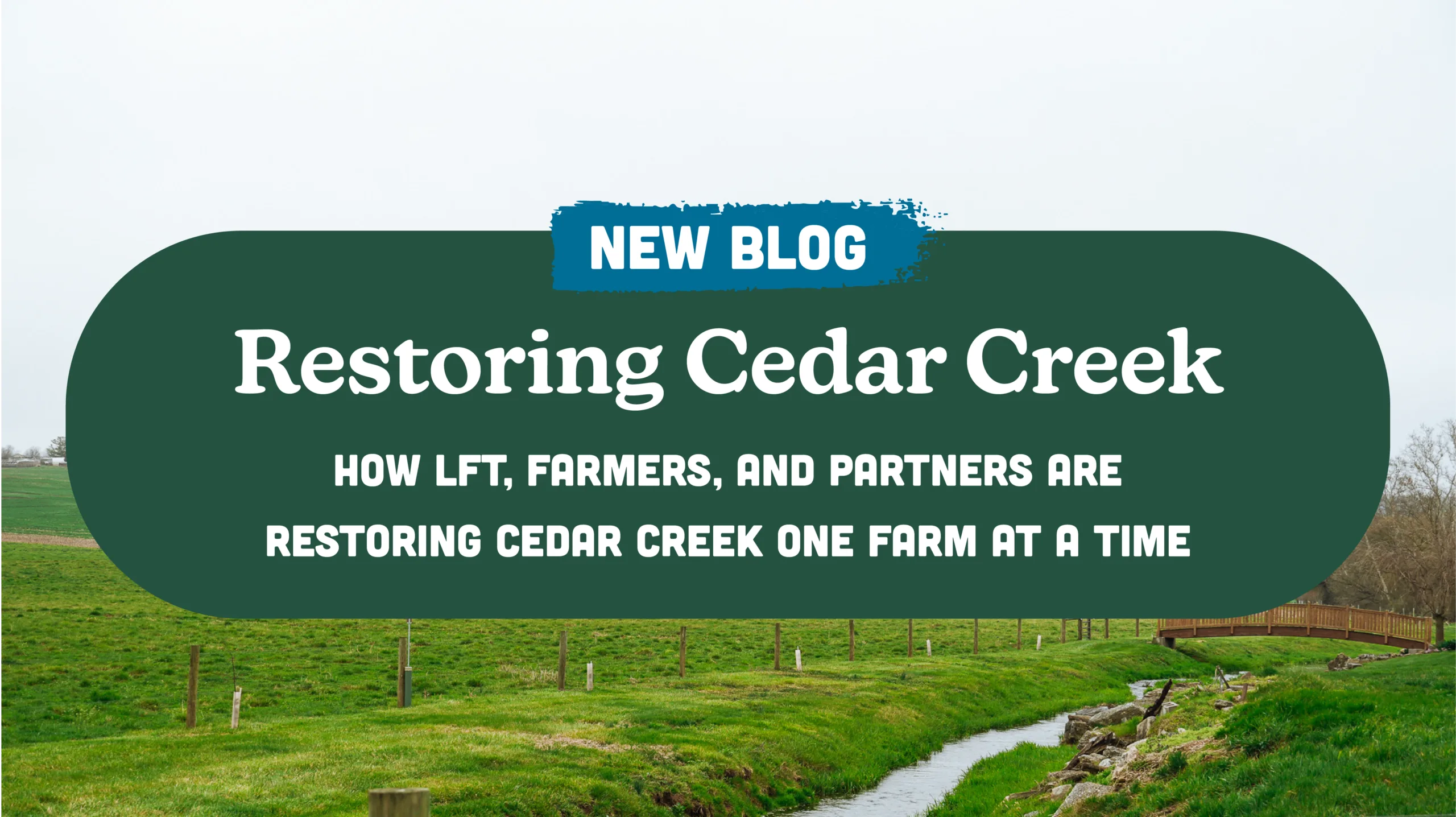
Along the banks of Cedar Creek in East Earl Township, the Clair Good farm has been a working dairy for generations. The 89-acre property sits in the upper Conestoga River Watershed, and like many Lancaster County farms, borders a stream whose water will flow into the famous Chesapeake Bay. The Goods understood that the way they treated their land here in Lancaster would affect the water downstream in the Bay. So, it was time to put the pedal to the metal and install some much-needed Best Management Practices.
Lancaster Farmland Trust (LFT) began working with the Good family in 2018. What started as basic conservation planning to bring the farm into compliance with state regulations has grown into one of LFT’s most comprehensive conservation partnerships — a testament to what’s possible when a farming family loves their land the way the Goods do.
Given the farm’s proximity to Cedar Creek, it was a high-priority site for water quality improvements. With funding from the National Fish and Wildlife Foundation (NFWF) and matching support from the Lancaster County Community Foundation, Lancaster County Conservation District, and Lancaster Clean Water Partners, LFT got to work implementing various conservation practices, including riparian buffers, stream crossings, a manure storage unit and more. Complete with twice-yearly buffer maintenance through LFT partner Trees for Graziers, the Good Farm was ready to make an ongoing impact on water quality in Lancaster County. Connecting farmers to partners like Trees for Graziers and various funders is how LFT ensures conservation practices are accessible and sustainable for the long haul.
The best part? The work doesn’t stop at the Good Farm. It’s one piece of a larger Cedar Creek restoration effort that LFT and other partners have been building for years. Conservation efforts in the area began with outreach through LFT’s Agricultural Outreach Coordinator, Gordon Hoover. After Gordon met with the neighboring Zimmerman Farm, a grant from NFWF funded the farm’s stream restoration efforts. Soon, LFT, East Earl Township, and others would expand this restoration work to neighboring farms in the area – including the Good property.
The Good Farm project adds another critical stepping stone on the road to de-listing as many impaired waterways as possible in Lancaster County, impacting the health of the Chesapeake Bay. These projects in East Earl represent real progress for Cedar Creek and beyond. However, they also illustrate the scale of the work ahead.
“The Good Farm is one farm, and we’re looking at a waitlist of about 50 preserved farmers who want to do this type of conservation work,” notes Amy Baumann, LFT’s VP of Strategic Development.
With young farmers taking over family operations, LFT and other partners are beginning to notice an uptick in interest in conservation work. LFT is excited to see this increased enthusiasm, and the growing waiting list is a long way from the sparse interest and numerous misconceptions staff faced only a few years ago. With the help of farmers, numerous partners, and gracious supporters, LFT cannot wait to complete more projects like this impactful Good Farm project, helping to de-list streams, support farmers, and ensure Lancaster’s land is happy and healthy for future generations.
To learn more about East Earl Township’s work on Cedar Creek, click here to hear partner leads Terry Kauffman and Justin Sauder on the Clean Water Conversations Podcast! To learn more about LFT’s conservation work, click here.