Down by the Bay
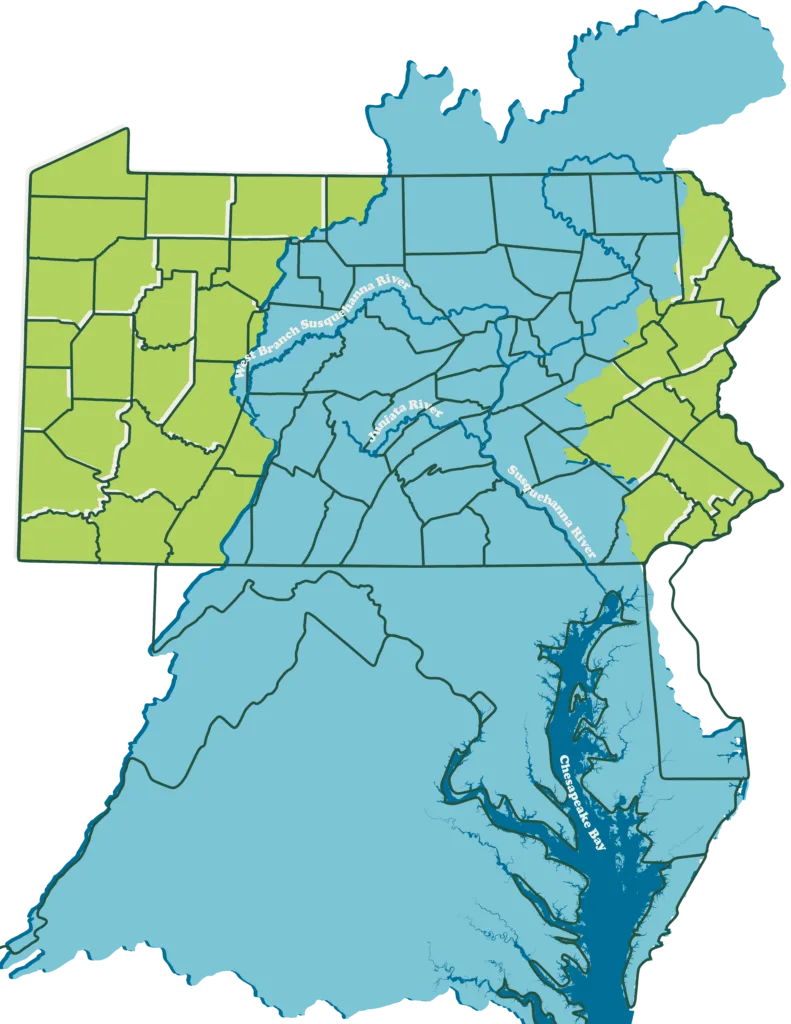
In Lancaster County, we all live upstream of the Chesapeake Bay and share a watershed. That means that pollution in our local waters also flows into the Bay. Therefore, when the Environmental Protection Agency established pollution remediation goals for the Chesapeake Bay Watershed over a decade ago, there was intense pressure on the agricultural sector in Lancaster to improve water quality, particularly by reducing nitrogen runoff from farms into local waterways. Nitrogen, along with phosphorus, are two nutrients found in animal waste and fertilizer that can destroy habitats and cause hypoxia (i.e. oxygen depletion in the water). Sediment and nutrients wash from sewage systems, paved surfaces, and farm fields into the Bay. Once there, they feed algae blooms, blocking sunlight and depleting oxygen from the water. Sediment also clouds water and smothers living things.
Understanding these consequences, LFT, partners, and preserved farmers are working together to implement critical best management practices on their properties that are helping Lancaster succeed in this area. The release of last year’s Chesapeake Bay Report Card showed the upper portion of the Chesapeake Bay, of which we’re a part, received a B-. The organization in charge of the grading said, “The upper Chesapeake Bay…has the second highest score in Bay health, and it continues to improve. This improvement is a testament to efforts to reduce nutrients in the Susquehanna River watershed, underscoring the hard work in Pennsylvania on nutrient reduction and riparian buffers”.
LFT recognizes the efforts of our preserved farmers to implement these critical projects that are making an impact on the health of our local waterways and those of neighbors downstream. Across the watershed currently, BMPs are in place to achieve 59% of the nitrogen reductions needed. We know that Lancaster County farmers are a big part of that success. There is still work to do, however, to reach our local and regional goals. LFT stands ready to work with any interested landowners of preserved farms on developing, financing, and implementing BMP projects that will improve the farm’s environmental and operational performance.