What is a BMP?
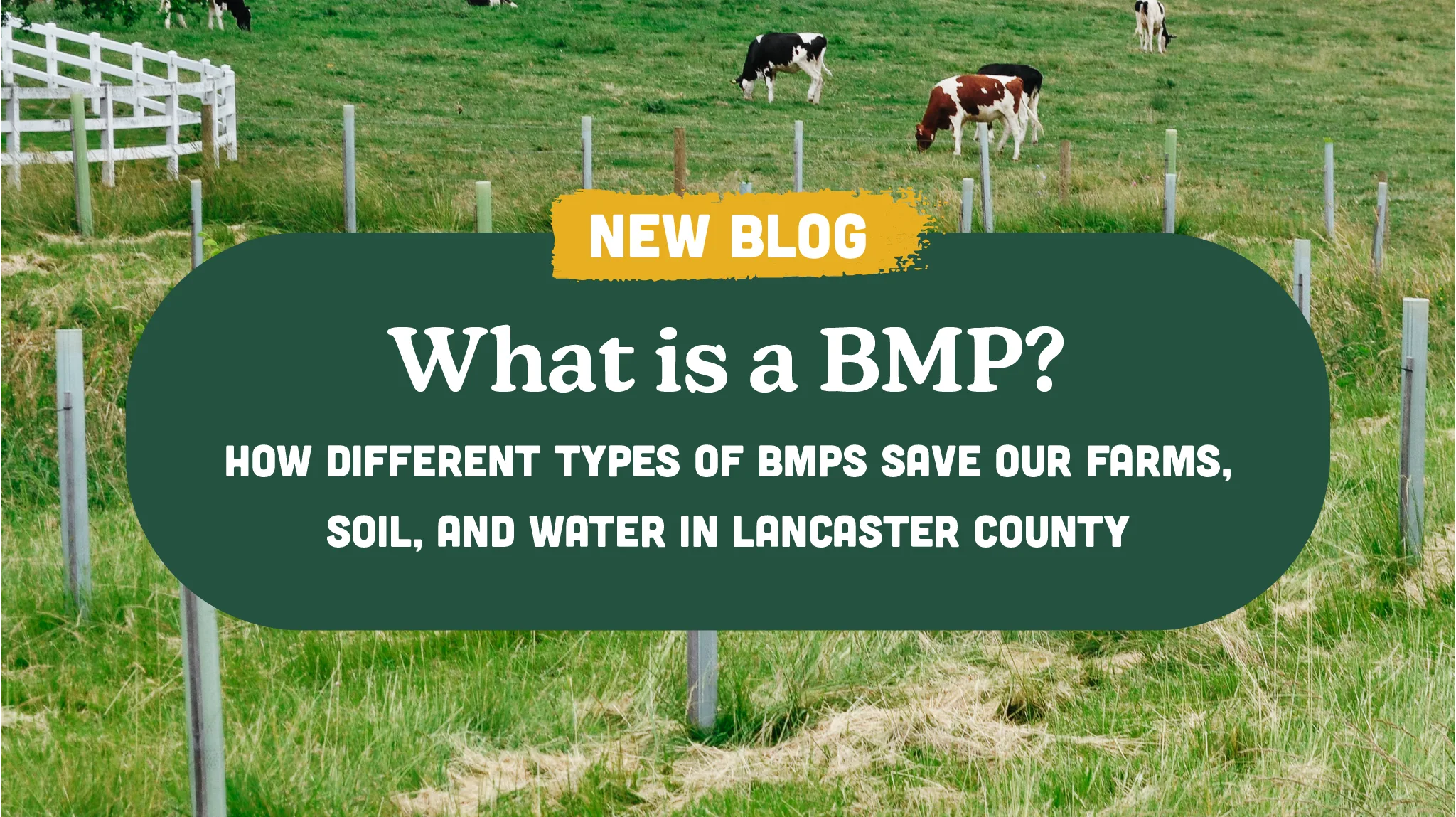
Conservation work in action begins with Best Management Practices (BMPs). BMPs are practices
farmers implement on their farms to protect natural resources. These practices protect our soil and
water by reducing erosion, pollution, and more. There are many types of BMPs, and you can spot
them on farms preserved with LFT! Here is a simple guide to our most common BMPs used on
farms to help paint a better picture on how this technical work creates a larger impact on our local
waterways.

Buffers
Trees planted along a waterway to filter pollutants. They reduce soil erosion and protect local streams.
“Together, LFT and volunteers planted a buffer along the Pequea Creek to protect the water and soil.”
Cover Crops
Crops that farmers grow to protect the soil when regular crops aren’t growing. They help keep the soil healthy, reduce weeds, stop erosion, and improve the soil.
“When the strawberry beds are dormant, we plant clover as a cover crop to protect the soil before the next harvest.”


Heavy Use Areas
A highly-trafficked area on the farm specially treated to prevent mud runoff and erosion from livestock or farm equipment.
“By adding a concrete heavy use area to our farm, we reduced mud and runoff, helping keep nearby streams cleaner.”
Manure Storage Pits
A pit used to store manure. This allows farmers to apply manure to fields only when needed, lowering pollutant runoff into waterways.
“Thanks to our new manure storage pit, we can fertilize our fields when needed and protect our waterways.”


Preservation
Protecting farms forever is a BMP! When you protect a farm, you protect all of its implemented BMPs, natural resources, and habitats forever.
“Preserving our farm ensures our BMPs are in place forever, protecting natural resources for the future of Lancaster County!”
Stream Crossings
A bridge or stabilized area for animals to cross a stream. This improves water quality by reducing pollutants that enter our local waterways and prevents erosion.
“Now that the livestock utilize our stream crossing, the stream is less muddy and dirty.”


Streambank Fencing
Fencing that limits animals’ access to the stream. This helps decrease erosion on the streambank and keeps pollutants out of streams.
“Our fencing keeps the cows from eroding the streambanks and stepping in the water, keeping it healthy and clean.”
